Wednesday, November 30, 2011

Providing education is not a business at India International School in Japan


This is the second post about India International School in Japan (IISJ) in this blog. The first post was before more than two and a half years after a visit to the school when my elder daughter joined the kindergarten. Now the reason behind this post is the queries raised by some of the visitors to this blog through blog comments and personal e-mails.

I have received both good and bad comments about the school. Some commentators were rude to scold me for writing good things about the school. In that post I tried to see the good things of the school. I don’t really want to reply to those negative comments received earlier since reply to a negative thing will also be a negative thing.

One thing we need to realize is the availability of such a facility in a far away land for Indian children. The approximate number of Indians in Japan may come around 27,000. Most of them are bachelors. Those with children were facing problem due to lack of schools based on Indian syllabus. Most of the Indian professionals stay in Japan for a shorter period and they need to return to the country. Continuing education in India, once they return back was solved by the presence of Indian schools in Tokyo. Indians living in other parts of Japan does not have this opportunity.

Tuesday, October 04, 2011

Ropeway trip from Nihondaira to Kunozan Toshogu Shrine

One of the possible options to reach at the Toshogu shrine dedicated to the Tokugawa Ieyasu, the great emperor of Japan, is to ride a bus from JR Shizuoka station to the Kunozan Yamashita. As the name indicates, Kunozan yamashita bus stop is at the bottom of the hill Kunozan. From the bottom of the hill, 1159 steps goes to the shrine at the top of the hill. That would have been more adventurous, but it might be a too difficult task for children. Moreover, the aerial ropeway ride would be more exciting to the children.

Frequency of buses are not so good from JR Shizuoka station to the Nihondaira hill top from where the ropeway starts. As per the instruction from the tourist information center located near to the ticket gate of JR Shinkansen line, we boarded the bus at 9:27 AM. The bus fare is 550 Yen per adult. The bus fare can be paid inside the bus before getting down. Even if you don't know how to pay, the driver will help.

The bus journey takes around 35 minutes from JR Shizuoka station to the Nihondaira ropeway iriguchi (entrance station). There is a zoo in between JR Shizuoka station and Nihondaira hill top with approx. 800 varieties of animals. If time permits it is worth to get down and visit the zoo. We could see the entrance of Nihondaira gakuin university on the way to the hill. The road to the hill top is with many curves and zig-zag. Persons with trouble of vomiting during travel has to take care by keeping a towel or anti-vomit medications during the bus ride.

Sunday, August 21, 2011

The exotic beaches and the warm hospitality of Japanese people at Shimizu

It was around 3:00 PM when we reached at the JR Shimizu station JR Shimizu station is approximately ten minutes journey from JR Shizuoka station on the way towards Hamamatsu in the JR line and is the third station from JR Shizuoka.

We were little confused after coming out of the ticket gate on the exit that goes to Kashi no-chi market, which is a fish market. After trying to locate the road by ourselves, we decided to approach some one local standing in the bus stop. He guided us to the west exit of JR Shimizu station by coming with us so that he might have thought the foreigners should not waste time again from enjoying the scenic beauty of his place.

We got down through the elevator to the ground and walked 5 minutes to reach to the Kashi-no-uchi fish market. As per our plan made after researching on the internet, we were supposed to find a water-bus service behind the fish market. Since we could not find it by ourselves, we asked an old woman standing in front of the fish market. Since she was not sure of the timings of the water bus that goes from the behind of Kashi-no-uchi market to the S-Plus Dream plaza, she took us to an Ojii-san who was guiding the cars going and coming from the parking lot. After explain where we want to go and how, the Ojii-san told the old woman to stay at his place and told us to accompany him.

We could see a water-bus leaving the barbor just a few minutes ago when we reached there. The water-bus stop (Water bus noriba) behind the Kashi-no-uchi market is a small place that it is difficult to recognize it as a place of boarding. The frequency of service is also less. We need to wait 40 minutes for another boat. So Ojii-san advised us to catch a taxi or bus from there to go to the S-Plus Dream plaza. He showed me the number to be called for the taxi and when I dialed it in the mobile, he talked on behalf of me to tell the location where we stand. The taxi charge we paid to travel from Kashi-no-uchi market to the S-Pulse Dream Plaza was 800 Yen. The Ojii-san and Obaa-chaan helped us generously to locate the place and get there without loosing much time during our one day exploration of Shizuoka.

Tuesday, August 16, 2011

One day trip to Shizuoka by Shinkansen

Inside the Tokyo station, there are separate counters for the reservation and ‘today's booking’ of Shinkansen tickets. While spending 5 minutes in search of the counter for reservation, I approached the information center, which is near to the counters that sells tickets for today's travel.

Though Shinkansen ticket charges are expensive compared to the normal type of JR tickets, it is worth enjoying the luxury and speed. If we travel alone and does not matter when to start and when to come back home, JR or other freelance transportation methods may be the preferred choices. Elder daughter was insisting on travel to some place by Shinkansen and we decided to go to Shizuoka. We had decided to cover maximum spots of attractions in Shizuoka in one day with children. The ticket was reserved on the Hikari Shinkansen at 8:03 in the morning.

There are three types of Shinkansens based on the speed and number of stations they stop. The fastest is the Nozomi. Nozomi stops at very few stations (big cities) and runs faster than other shinkansens. It was the fastest train until we hear more higher speeds from China. The second fastest in Japan, the Hikari stops at limited number of stations. Since Shinkansen get more travelers from Shinagawa and Shin-Yokohama stations, The Hikari Shinkansen stops at Shinagawa and Shin-Yokohama on its way to Shizuoka being the third stop. It covers almost 180 kilometers in 73 minutes.

Friday, July 29, 2011

Rinkai Koen Tokyo sealife aquarium and diamond and flower ferris wheel

Though it was a sunny day, the Rinkai Koen was reasonably crowded. We preferred to visit there after the lunch. As the climate was not kind enough to allow for an outdoor walking we headed to the aquarium, which is known as Tokyo Sealife Aquarium.

Children enjoyed walking around inside the aquarium. We could see lot of tuna fishes and other sea creatures. The aquarium also have penguins and seabirds. At a specially made water tank, children can touch fishes with their hands.

Rinkai Koen’s Giant wheel, which is called the Diamond and Flower Ferris Wheel has been visible to us from our apartment. Ever since we shifted to the apartment in Edogawa-ku, we have been thinking of making a visit to Rinkai koen. The Diamond and Flower Ferris Wheel is believed to be the second tallest ferris wheel in Japan. Tokyo bay, Disneyland etc. are visible clearly from the top of the Ferris wheel. On a clear day, Mount Fuji can also be seen from the top.

Sunday, July 10, 2011

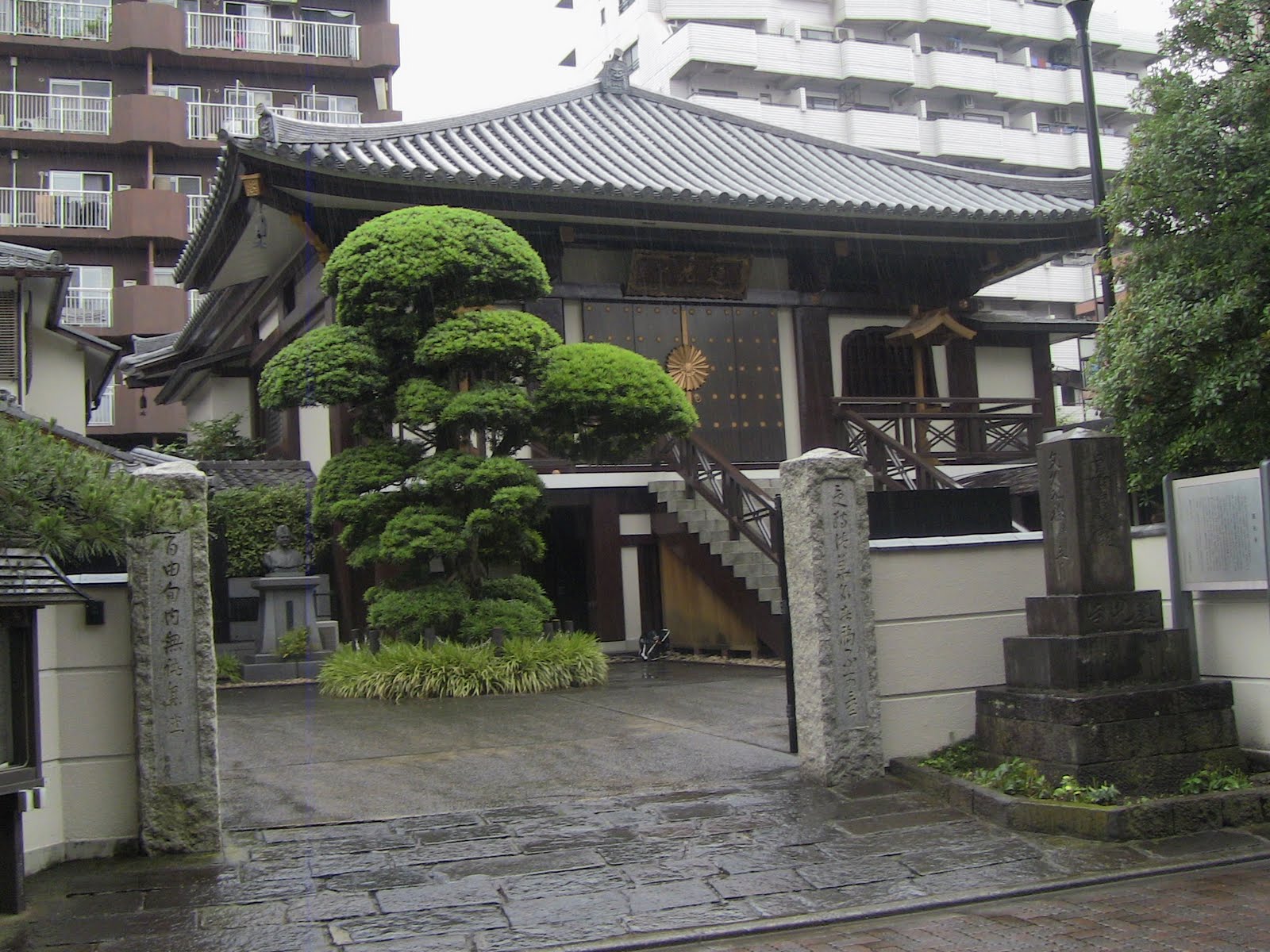
Renkoji - A temple for Netaji Subhash Chandra Bose in Japan

On June 18 we visited the Renkoji temple, where the ashes of Netaji Subhash Chandra Bose is believed to be kept. We have been thinking of making our visit to the temple ever since we heard of such a temple in Japan. It was a surprise to us to hear that Netaji is being respected in Japan, far away from his own country.


Netaji was a revolutionary freedom fighter who has a special place in the hearts of the youth in India. Though the history books in India have limitations in teaching about Netaji and his principles, people respect him as the most influential personality who could contribute the most to the Indian freedom fighting. He was the first to call Gandhiji as Mahatma. Mahatma in Hindi means the great soul. Due to the differences in approaches and opinions towards the methods adopted for India’s freedom movement with Indian National Congress, Netaji left India to seek possible help from other global partners like Germany and Japan. He succeeded to get the help from the then emperor of Japan during second world war and formed Indian National Army, INA by gathering Indians settled in Malaysia, Singapore and similar neighboring countries. Many Indians from the British India also joined in INA to fight against British East India Company rule.

Sunday, April 24, 2011

Marriage has many pains, but celibacy has no pleasures

An interesting topic came out during discussion with friends recently was the right age for marriage. The discussion on this topic was particularly useful as it added more Japanese vocabularies that are associated with the culture and daily life. The first word learned was Tekireiki written in Hiragana as てきれいきand in Kanji as適齢期.

The old concepts of marriage and the right age for marriage might have changed or deviated in Japanese society. The concept of appropriate marriage age differs from country to country and even within the country intself. In India for example, where multiple races, multiple religions and multiple customs are being practiced, the concept of marriage age is not uniform. While it may be difficult or practically impossible to find an average age for marriage age in any country, it is possible to find the average trend in any society.

Sunday, April 03, 2011

Ganbare Nippon!

The immigration officer at Chennai Airport asked me whether it is safe to go to Tokyo now. I told the situation is getting improved. That might be what anybody could have said on 26th March. Things were uncertain when started to Tokyo. Uncertainty prevails even now to a ceratin extent. Today’s live radiation levels in Tokyo showed a higher value, but still well below the permitted safety levels.

More than three weeks from now, the disaster had shaken the world’s second strongest economy. The fear of nuclear radiation has not gone and an uncertainty prevails all over. The Japanese televisions presents the actual facts on a daily basis. There is bilingual service available in NHK that helps foreigners to understand the situations in Japan.

Looking back three weeks, it is a  pure coincidence that we planned our vacation on 11th March to leave to India to perform my father’s 10th annual death anniversary rituals. With kids we left Tokyo at 11:00 AM on 11th March. We heard the news after landing at Chennai Airport and by seeing the scenes at the hotel television we were literally terrified. With teary eyes, we went to bed. Next day, while traveling on domestic flight to Kochi, we could read the headlines on a leading Malayalam daily about the earth quake and tsunami in Eastern Japan. The heading conveyed the magnitude of the tragedy happened in Japan, the country we left hours before. We could read the heading as ‘Japan was swallowed by tsunami’.

Sunday, January 16, 2011

A unique way of teaching Japanese language to foreigners


It seems as if the thermometers in Japan recently are reluctant to rise more than 10deg C. Yesterday the iGoogle weather gadget was showing -1 deg C at midnight and as per the reports on Sunday a cold air wave is supposed to hit Japan that will lead to low temperatures. It has been snowing at the surrounding prefectures of Tokyo. Tokyo remained at low temperatures with cold wind at times.

Recently, I used to watch the weather reports in NHK after I learned the basic words and phrases being used in a weather report from Mana Suzuki-Sensei. Ever since there were reports of cold air wave thwarted the life in Europe and Northern America , Japan was also expecting similar climatic pattern this year. Japan Meteorological Agency had warned of strong winds and heavy snow and high waves, specially along the coast of the Sea of Japan that will continue through Monday. As per the weather reports a strong cold air mass and freezing cold pattern continues to stay around Japan.

From the third week of December and after the Japanese language proficiency test, Mana Suzuki-Sensei changed the style of teaching Japanese language from the conventional way of following a book. I experience her way of teaching Japanese very useful when students get many chances to hear and practice daily life conversations. It is almost impossible for fresh foreigners to follow announcements at public places and also words used at public places in day to day life in Japan.

Monday, January 10, 2011

New Year celebrations in Japan

Before the chirping birds liven up the eastern horizon, we walked out to the chilling cold. Literally shivering in the chilling cold, yet with the single-minded resolution, we walked on Funabori-bridge that crosses the river Arakawa. The temperature was around 2 deg C. The wacky herd of seven was proceeding to the middle of Funabori-bridge to say nothing but a ‘Happy New Year’ to Arakawa River.

A New Year celebration without this ritual would have been meaningless. Arakawa River symbolizes to the whole Japan and neglecting the winter morning cold wind, we could say Happy New Year to the whole Japan. This is how we started the first day of 2011.

This year’s New Year party celebration was unique and standout with memorable events. In the past I had participated in New Year celebrations at Riyadh, Goa, Gurgaon and Chennai apart from the hometown Thrissur. This year, the celebrations started at 31st evening and continued the whole night till 2011 January 1st morning with exciting amusements. The final crazy ritual, i.e., to say loud happy New Year to Arakawa river in the morning cold was directed by Uday-san, popularly known as Neelan among friends in Japan.

New Year is celebrated in Japan in a big way unlike many other East Asian countries. The Japanese people follow Gregorian calendar and celebrate New Year's Day on January 1st the same way as Europe and America do. Though different cultures have different concepts and period for celebrating their own specific New Year day, January 1st has become an international New Year day. History says Japan was following Chinese lunar Calendar till the year 1873. I think Korea, Taiwan and Vietnam are still following Chinese calendar. Japan adopted Western style to celebrate New Year on January 1st with the acceptance of Gregorian calendar after some years of the famous Meiji Restoration.

Japanese people celebrate New Year with their own unique customs. There is a belief that if the New Year events are not done properly the rest of the year will be ill-fortune. There is a spirit for New Year also. It is called ‘Spirit of New Year’ and in Japanese 年の神 (としのかみ-toshi no kami). Spirit is Kami in Japanese language. Houses and business places are decorated with Kadomatsu (門松―かどまつ). Kadomatsu is made of bamboo and branches of pine branches. I could read more on the festivals in Japan from the notes given by Seki-sensei. Also, recently I encountered Kazumi-sensei’s blog that teaches Japanese language and customs using English and Japanese. Kazumi-sensei’s recent post has a photo of Kadomatsu. When we went to Oshiage to see the Tokyo sky tree yesterday, I could take photo of Kadomatsu that was displayed in front of a Japanese restaurant.


I used to receive New Year greeting cards from my colleagues for the past years. This is a custom in Japan to send post cards to friends and relatives similar to western culture. In India too people send greeting cards to friends and relatives. With the growth of internet, e-cards are popular recently. New Year day post card is known as nengajoo年賀状 (ねんがじょう).

The New Year cards were there in the post box on first day of January itself! New Year cards arrive on first day of the year and thereby convey the spirit and warmth of the sender to the receiver. This year I received a New Year card from Mana-Suzuki Sensei, who is my Japanese sensei on Sundays. Sensei gave two gift cards too. It is also a custom in Japan to return or reciprocate equally for any kind of favors one received from another person. I can use those gift cards from the nearby convenient store (Konbini – コンビニ) to buy things.


Though Japanese adopted Gregorian calendar and celebrate New Year on January 1st similar to the western cultures, the customs and rituals are purely Japanese. This is point Japan differs from other countries. My observation is that Japan adopts things from other countries and soon converts them to a unique Japanese style.

Once something is accepted to Japanese style, it is very hard to identify it as foreign again, similar to the process happened to the word ‘convenient store’. The word ‘Convenient store’ is adopted to Japanese language as Konbini and foreigners without any introduction to Japanese language can never guess any of the similar English word like Konbini. New year celebration and customs in Japan too are best examples of this typical Japanese adoption process. Such an indigenous conversion happens in Japan and this is one of the distinct characteristics of Japanese culture.

Tuesday, January 04, 2011

Use of plain form during conversation in Japanese language

Use of plain form is one of the confusing sentence pattern I have encountered in the study of Japanese language. The confusion is on the situation and with whom the plain form can be used. It is understood that the plain form can be used with friends and among family members for example. When it comes to switch between forms – plain – polite – honorific, Japanese language becomes too harder for a foreigner.

One of the most frequently used and easy to use conversational piece to understand the use of polite form is the reason a person says to explain why he became late to meet his friend. The question can also be in the plain form by adding か at the end of the sentence. Let us assume the conversation between Tom-san and Kimura-san.

木村さん:どうして 遅れたんですか。(どうして おくれたんですか。Dooshite okuretan desu ka?)
トム:バスが 来なかったんです。(バスがこなかったんです。Basu ga konakattan desu)

Kimura-san: Why were you late?
Tom-san: The bus did not come.

Kimura-san was expecting that Tom-san will reach at the scheduled time of their meet. Tom could not come at the promised time. Tom was late for the appointment. When they met each other, Kimura-san asks Tom-san the reason for his late coming. Tom-san explains the reason for his delay that the bus did not come. It is understood to the listener that Tom might have used another mode for the travel. Many Japanese language text books use this reason for the delay. Tom-san says the bus did not come and does not say how he reached, or it may be the continuation of their conversation.

After learning the plain form, we tend to use plain form with all situations. The switching between the forms depending on the conditions of conversation is a conscious process. Plain can not be used when one talks with his/her superior or a person of higher status.

The reason for the delay could be (train delayd…) 電車が遅れて…..which is more frequent now a days due to じんしんじこ(human accident or suicide).

If we see a friend wearing a new shirt, we can ask どこで かったんですか。(from where did you buy). “When did you come to Japan” in plain Japanese is いつ日本へ
きたんですか。Here きましたか changed to きたんですか。Interestingly, the ですか is still used in the plain form.

If something is not beautiful or attractive, we can say きれいじゃないんです (kirei ja nain desu). To express the (i) い adjuctive like さむいsamui (cold) in plain form, we can say さむいんです。The (na) な adjuctive for example again the きれい will be きれいなんです (kirei nandesu)。Note that for na adjuctive is changed to nandesu.

The Japanese name used in the above example is Kimura which is written in Japanese Kanji as 木村. The 木 or ki stands for the tree and the 村 or mura stands for the village. The Kanji村 is a combination of two Kanji, the left one is the Kanji for tree (ki) and the right one is the Kanji for law or measure. Kimura is one of the popular names in Japan.

This post is a kind of revision for me of what I have learned from the Japanese language class. The new year holidays is a long gap for Japanese language study. During the recent new year holidays, the score report of the practice JLPT test for the new JLPT also came. As I have written in the previous mail the New Japanese language proficiency test (新日本語能力試験 - しんにほんごのうりょくしけん)was a free practice test for candidates applied for the original JLPT held on December 5th, 2010. As expected my listening (ちょうかい)scored less than the average score, when the language knowledge and reading (げんごちしきとどっかい) scored around 86%. The original JLPT result is expected to come on the first or second week of March 2011.

Please notify me if there are any mistakes in the Japanese hiragana or Kanji typed in this post. This is the first time I typed Japanese scripts directly from the keyboard. Before I was using MauveCloud's Browser Tests: Kana Generator to input Japanese scripts in this blog.Recently only I could change the windows English setup to type Japanese scripts.

Wish you all a happy and prosperous New Year!

Tuesday, December 14, 2010

Japanese language proficiency test

Approaching towards the end of three years living in Japan, taking Japanese language proficiency test (JLPT) gave a good understanding of the level of Japanese language so far I have acquired by attending the lessons and daily interactions with Japanese people. The test site was at Yoyogi. The TKP business center at Yoyogi was crowded with foreigners who aspire to test their knowledge on Japanese language.

The Kanji paper was comparatively easier (for me) as I have done a fair justice to the book 'Write Now! Kanji for beginners' published by 3A Corporation. This book has 323 Kanji arranged in 21 lessons. The writing and reading practice notes given in the book is also helpful. Learning Kanji is the toughest part of Japanese language learning for a foreigner. The Japanese language teachers are good at teaching grammar, vocabulary, listening and speaking parts of Japanese language. Learning Kanji needs a great effort from the part of the foreigner more than from the teacher.


For Japanese people who learn Kanji from childhood, it is a part of the curriculum and they learn it over a period of 9 years. Whatever the structure, the stroke or the shape, Kanji is just a script for Japanese people. For grown up people, especially after a certain age, this kind of learning will not work effectively to the foreigners. Kanji needs logical thinking and it has the right logic.

Kanji is the abstract of ideas and thinking process. Kanji reflects the wisdom of the East Asians, their association with the nature and living things on this earth. May not be an exaggeration that a book can be written based on each Kanji. 3A Corporation has done a great work to compile the most frequently used 323 Kanji that will appear for the old JLPT level 3 test. From this year onwards there will be change in the levels. I took the Level N4, which is equivalent to the level 3 of the past JLPT. From this year there will be five levels of JLPT starting from N1 to N5. More details can be found in JLPT official website

Many websites helped to study Japanese Kanji online. Those sites are updated with plenty of study materials aimed at foreigners who may wish to start from the scratch. Charles Kelly's Online Japanese Language Study Materials, which has the quiz on vocabulary, grammar and Kanji helped a lot to do revision of what was learned. Repeated attempts in the quizzes provided in the website will help students.

Recently I found a very useful site smart.fm which introduces an impressive way to master languages. Not only limited to Japanese language, smart.fm has many areas of knowledge useful to students all over the world. This website has a special tool to measure the level of study, which will tell where we stand in the course of learning process.

Basically, I have been learning the Japanese language by using Minnano Nihongo books series I and II. In our Japanese language classes, we have completed Minnano Nihongo book I which has 25 lessons and half of Minnano Nihongo book II, up to lesson 38. For level N4, an examinee is supposed to study both the books and approximately 300 Kanji. Minnano Nihongo books follow the conventional way of teaching methods. Though conventional, the examples, pictures and live situations illustrated in the books are impressive. The caricatures are lively and we can observe a sarcastic attitude in the illustrated situations.

Mr. Mike Miller is a character who represents foreigners in the books. In one of the conversation strip, Miller's boss is a lady, which is extremely rare in Japan. In western cultures it is normal and since Miller is a foreigner, he can have a lady boss! The caricatures convey the face expressions effectively to the reader when the characters encounter with unexpected or unusual life situations.

JLPT is conducted by Japan foundation and Japan Educational services and exchanges. Japanese Language Proficiency tests are conducted twice in a year. Exams are held on first Sunday of December and July every year. There was a trial JLPT this time different from the old years. It was a good experience to prepare for the practice JLPT examination. The practice test was on November 21st at selected centers. Hitotsubashi University, which is at Kunitachi, around 40 minutes from Shinjuku, was the center for the trial JLPT. The test was for the selected candidates and the criterion of selection was not disclosed to the applicants. Application form for trial JLPT was sent to a few numbers of actual JLPT test applicants and from the list of applicants for trial, a few were selected for trial exam. As an encouragement to come for the trial JLPT, an amount of 2000 Yen was given to those who completed the trial test. JLPT official website also has the sample of the JLPT test. Japanese Language Proficiency Test
The first sensei to teach Japanese language was Morishita Sensei, then Imade sensei and Suzuki sensei. Currently I am learning from Seki sensei under whom I could start a little bit of conversation in Japanese language. I have been learning from Seki sensei for more than one year. For the past four months I have been taking a private tuition from Mana Suzuki sensei in Komatsugawa on Sundays.

Taking JLPT gives a good understanding on the current level of learning Japanese language and the areas where one needs to concentrate more. Application kit can be obtained from the stores for 500 Yen. For details of JLPT application procedure test samples, the following site will be useful JLPTGUIDE

Preparatory Course for the JLPT N5 (Japanese Language Proficiency Test)


Thursday, November 25, 2010

Revisit to Showa Kinen Koen

The word ‘Déjà vu’ might be an exaggerated expression of feelings that aroused when reached at Tachikawa again. It was a revisit to Showa kinen koen to observe the autumn leaves. Indeed, this time the looks of Showa kinen koen were different from the one we observed in the last spring.

Personally for me and for this blog, the Showa Kinen Koen played a crucial role in the preceding months. Tachikawa was the place where I was compelled to put a stop to the blog writing almost more than six months from now. It was the peak of spring in Tachikawa during the last weeks of April. An unexpected impairment, followed by the doctor’s advise kept me away from sitting long hours in front of computer. As you know well, blogging needs a lot dedication and I was unable to commit that loyalty to this blog. Last spring, we walked a lot inside Showa Kinen Koen.

The photo posted above was taken by Mr. Jayaraj. The beauty of the nature and photo shows the skills of photographer too, though I have taken this photo from his Picasa album without his permission!

For sure, I must express my sincere apology for not able to reply to the queries that I received. I could read some of the comments in this blog and those appeared in expat-blog. Frankly I do admit my failure to do justice to those comments.

With the autumn season presents itself to the nature and people charming and pleasant memoirs, I feel as if the mind is filled with renewed energy. It took almost a season to come out of life’s tremor.

Now the blog is back! It might be a coincidence that I do restart blogging from where I stopped – Showa Kinen Koen. The life is all about coincidences. Some of us believe in super-natural powers. We like to believe those coincidences as miracles of God. If it gives a sort of comfort, it is fine. For a few, unwilling to accept those super natural miracles, the life is a flow of repetitive experiences.

Decision to revisit Tachikawa was sudden followed by a call from family friends who were already reached at Showa Kinen Koen. I had just finished the Japanese language class and was heading home for the lunch. Recently, I have been attending the Japanese language classes taken by Mana Suzuki-san who conducts classes at Komatsugawa. I may write more about these new Japanese lessons separately.

We got around one hour to walk around Showa Kinen Koen. It was not enough to imbibe the nature’s marvels. In the rush, we forgot to take the camera too. The photos in this blog are received from friends. The bonsai tree leaves were also turned to red, pink and yellow.


The Japanese garden was especially beautiful and was the only place we could visit and take photos during this visit. For those who plan to visit Showa Kinen Park the area guide will be useful to plan before starting from home. Showa Kinen Koen Area Guide

Showa Kinen Park needs a full day. For those who enjoy the nature, it needs many days and still a revisit will give a different experience. We were also literally surprised to see another face of Showa Kinen Koen during the autumn season. During spring, the garden was clad with flowers, Tulips to say more specifically.

(Another masterpiece from Jayaraj's camera)The nature refills the life’s energy or in other sense the nature has abundant energy that any living being can absorb. Showa Kinen Koen is one of such beautiful part of nature where we can take renewed energy and fill the mind with tranquilizing landscapes.

Photos copyright to Mr. Jayaraj and Mr. Eldho

My Experience with POVO After Leaving Japan - A Caution for Foreign Residents

When I was living in Japan (until May 2023), I used KDDI mobile services for many years without any issues. When I was transferred internall...