Monday, December 19, 2011

Programming the crowd by conditioned reflexes


There was an interesting sharing yesterday by one my friends in facebook. The shared post was a slide showing the result of an experiment by scientists carried out on a group of monkeys. The outcome of the experiment is interesting and has significant importance to our social behavior, the reason why I would like to write here.

At first the scientists selected a group of 5 monkeys and put them in a cage. In the middle of the cage they placed a ladder. At the top of the ladder, they placed some bananas. Obviously, the monkeys will be tempted to eat the bananas. One of the monkeys climbed up the ladder and took the banana. Then the scientists splashed cold water on other four monkeys standing on the ground. Splashing of water was repeated whenever a monkey climbed and took the banana. The monkeys now realized that whenever a monkey climbs the ladder, the rest will be splashed with cold water, which they did not like.
All the five monkeys one by one tried to climb to take the banana, but the one who try to climb would be punished by beating by other four monkeys.

As a next step, scientists replaced one of the monkeys with a new monkey. The new one’s mind was fresh and did not know about the cold water splashing. By seeing the banana he started climbing up. The other four got angry, pulled him down and beat him. Scientists did not splash the cold water, but the fresh one got beaten by others.

Thursday, December 15, 2011

What Makes Japanese People Different from Others?

Every time I read about the street fights and hooligan hostilities in my country, I am more convinced that we are still at the primitive stage of human civilizations, though it is widely thought otherwise. The motivation to start writing this post is Mr. Omar Abdullah’s tweet on the hospital fire in Kolkata, one of the famous cities in West Bengal. While our history books are proud to acclaim thousands of years of inherited civilizations, the anarchic state and the vicious uproars point to the story of an immature and halfway dropped civilization process in India.

We may have hundreds of reasons to justify the hooliganisms and vandalisms, sweetly coated with the reasons of freedom of speech and expression, democratic rights, and so on. Freedom of speech and expression should not harm others as well. Those actions that harm others cannot be counted as the result of a democratic way of agitation. Such criminal actions are the result of the desire to kill, the desire to destroy, and the animal instincts that exist in the primitive minds of human beings inherited from their uncivilized ancestors.

People in southern states of India, one state which is home to the most educated people and the other which is home to the cultural capital of India, have been misled by their political protagonists. It is hard to find ‘differences between people in Tamil Nadu and Kerala’ unless you are strongly motivated to write a thesis on that subject. The problem could have been solved through discussions rather than pulled out to the streets. The street dogs know only to fight and bark for a single piece of bone, and this is what we see and hear now. An illiterate crowd could be malleable, but one thing has become certain: now that education, or the rate of high literacy, won’t automatically bring any common sense or guarantee that the educated mass cannot be mass-hypnotized.

Is this what we had inherited from our ancestors through the so-called 5000 years of ancient Indian civilizations? The land where the looking into the self was taught as more important than looking to others had gone years back to the early stages of human development or might have stopped somewhere in the middle of the civilization process.

The chaotic state still exists in India, where multiple ethnic groups have to share common land and bread. The migration of ethnic groups and their spread were not directed with a clear objective; rather, the movements might have been caused by war, famine, and natural calamities. The intrusion of new elements into an existing system causes disorder. Disorder causes for collision. This is true in the science, and now I am convinced that it is true in social science too.

In fact, collision is what we see in our society. As the particles collide and generate heat in a system, different groups ram, and we call it unrest or agitation. This process may continue till a unification happens, and it may take years, but any society where multiple interest groups co-exists has to go through these processes.

Japan is almost homogenous and has one of the highest rates of literacy. Four years before, I read in a blog that the Japanese race is unique. I started searching for the truth of this statement and went through different academic papers and websites. There is no race called the ‘Japanese race.’. Japanese people belong to the Mongoloid race, in which the Koreans, Chinese, and other East Asian people belong. The other way around is propaganda that is similar to the one that Indian right-wing groups use to find a common ancestry for all Indians by denying outside migration to India. Scientific facts are bad for many deceptive groups.

What makes Japanese people different from other East Asian countries is their more civilized manners. That is the outcome of years of civilization processes that happened in a unique way that is exclusive to Japan. Here I don’t claim any superiority to the Japanese society, and they don’t have it either. They are just like any other country’s people with all kinds of emotions and instincts. History may have something different to tell, but observing the current practices, I feel this way. It is my personal observation that the public behavior of Japanese people, at least among themselves, if not to all the foreigners, is more refined.

There were internal fights in Japan, and there were different interest groups as there are there in other parts of the world. Japan is like a bottle into which differently colored solutions are poured, closed with the cap, shaken thoroughly, and then allowed to rest for 250 years. Now the mixture has become perfect and looks as if it is one of the unique base colors. That mixing produced a different color that is unique to Japan! Want to call it a different race? OK...

Signing off...

Tuesday, December 13, 2011

Japanese way of redesigning the nature and its resources


God (not in the institutionalized form but in an absolute sense) might have His own plans, but human beings have their own plans. Both may not necessarily be the same. When it contradicts there is a conflict, which may result in catastrophes. We call them man-made disasters.

Some fifteen years before while going through a magazine article captioned ‘Future wars will be for water” I was prompted to think to redesign the natural resources so that such conflicts could be reduced. Thoughts of redesigning the natural water resources had its seed from the news on diverting the rivers through the water-scarce regions of Rajasthan state in India. India’s ever powerful lady prime minister Mrs. Indira Gandhi was ruling at that time. She had a great vision to redesign India and redefine the life. She did many attempts to achieve those goals, which the predecessors could not carry forward.

The reason why I started writing this post is not the current fight between two southern states in India for water which is in the headlines of Indian newspapers recently. While walking from Indian School in Nishi Ojima to our apartment at Higashi Ojima by the river side, we could see some construction work in progress on the river banks. Also I heard from Japanese teacher that the kyu-nakagawa river, which is visible from our apartment’s front side veranda is an artificial branch of the Arakawa river.


Thursday, December 08, 2011

What percentage of the salary a foreigner can save in Japan?

 
Some of the visitors to this blog were interested to know the living expenses in Japan and how much they can save. It is quite natural to have these concerns about living costs before one makes final decision to come to Japan. For expatriates, apart from the job satisfaction, savings is one of the major driving forces to accept the offer from their prospective employer in Japan. Cost of living has increased recently. “Especially in the changed scenario” one would like to add with the preceding sentence in the wake of recent alarming news from one of the famous baby food producers.

Living cost for foreigners in Japan and I believe also for Japanese people has been on the rise after March. Either people buy water from the stores. Some book online from western sides of Japan or water from outside Japan. The consumption tax will have negative impact on the potential savings.
 

Friday, December 02, 2011

Disaster is a fact, so is life and death


Some weeks back, along with friends I conducted some measurements to verify the radiation levels at different locations of Komatsugawa, especially where our children frequently play on weekends. Almost 9 months have passed since the disaster, still the fear of radiation linger in the minds of those who decided to stay back in Japan. Radiation is a fact and living with the painful facts needs an extra effort and justification. Probably the measurements we conducted were also to justify our decision to stay back.

It is also a fact that, solving disasters whether manmade or natural takes long time. Any kind of disaster is a sudden transition from a balanced state to an unbalanced state, where the whole system knowingly or unknowingly goes out of a defined set of procedures. Unfortunate, but it happens. It happened in Russia, now in Japan, tomorrow somewhere else. But the thirst of human beings to experiment with their own life to find new things and progress never ceases. It is this aggression of human beings to explore and conquer nature and universe differentiates them from other creatures.

Emotion does not play a significant role in the human endeavors for scientific progression. That is how humans evolved and learned to master things around them. Strong determination to tame the nature and surrounding things in the struggle for existence (more close to the definitions of Ayn Rand than Darwin) is the foundation of modern civilizations.

Wednesday, November 30, 2011

Providing education is not a business at India International School in Japan


This is the second post about India International School in Japan (IISJ) in this blog. The first post was before more than two and a half years after a visit to the school when my elder daughter joined the kindergarten. Now the reason behind this post is the queries raised by some of the visitors to this blog through blog comments and personal e-mails.

I have received both good and bad comments about the school. Some commentators were rude to scold me for writing good things about the school. In that post I tried to see the good things of the school. I don’t really want to reply to those negative comments received earlier since reply to a negative thing will also be a negative thing.

One thing we need to realize is the availability of such a facility in a far away land for Indian children. The approximate number of Indians in Japan may come around 27,000. Most of them are bachelors. Those with children were facing problem due to lack of schools based on Indian syllabus. Most of the Indian professionals stay in Japan for a shorter period and they need to return to the country. Continuing education in India, once they return back was solved by the presence of Indian schools in Tokyo. Indians living in other parts of Japan does not have this opportunity.

Tuesday, October 04, 2011

Ropeway trip from Nihondaira to Kunozan Toshogu Shrine

One of the possible options to reach at the Toshogu shrine dedicated to the Tokugawa Ieyasu, the great emperor of Japan, is to ride a bus from JR Shizuoka station to the Kunozan Yamashita. As the name indicates, Kunozan yamashita bus stop is at the bottom of the hill Kunozan. From the bottom of the hill, 1159 steps goes to the shrine at the top of the hill. That would have been more adventurous, but it might be a too difficult task for children. Moreover, the aerial ropeway ride would be more exciting to the children.

Frequency of buses are not so good from JR Shizuoka station to the Nihondaira hill top from where the ropeway starts. As per the instruction from the tourist information center located near to the ticket gate of JR Shinkansen line, we boarded the bus at 9:27 AM. The bus fare is 550 Yen per adult. The bus fare can be paid inside the bus before getting down. Even if you don't know how to pay, the driver will help.

The bus journey takes around 35 minutes from JR Shizuoka station to the Nihondaira ropeway iriguchi (entrance station). There is a zoo in between JR Shizuoka station and Nihondaira hill top with approx. 800 varieties of animals. If time permits it is worth to get down and visit the zoo. We could see the entrance of Nihondaira gakuin university on the way to the hill. The road to the hill top is with many curves and zig-zag. Persons with trouble of vomiting during travel has to take care by keeping a towel or anti-vomit medications during the bus ride.

Sunday, August 21, 2011

The exotic beaches and the warm hospitality of Japanese people at Shimizu

It was around 3:00 PM when we reached at the JR Shimizu station JR Shimizu station is approximately ten minutes journey from JR Shizuoka station on the way towards Hamamatsu in the JR line and is the third station from JR Shizuoka.

We were little confused after coming out of the ticket gate on the exit that goes to Kashi no-chi market, which is a fish market. After trying to locate the road by ourselves, we decided to approach some one local standing in the bus stop. He guided us to the west exit of JR Shimizu station by coming with us so that he might have thought the foreigners should not waste time again from enjoying the scenic beauty of his place.

We got down through the elevator to the ground and walked 5 minutes to reach to the Kashi-no-uchi fish market. As per our plan made after researching on the internet, we were supposed to find a water-bus service behind the fish market. Since we could not find it by ourselves, we asked an old woman standing in front of the fish market. Since she was not sure of the timings of the water bus that goes from the behind of Kashi-no-uchi market to the S-Plus Dream plaza, she took us to an Ojii-san who was guiding the cars going and coming from the parking lot. After explain where we want to go and how, the Ojii-san told the old woman to stay at his place and told us to accompany him.

We could see a water-bus leaving the barbor just a few minutes ago when we reached there. The water-bus stop (Water bus noriba) behind the Kashi-no-uchi market is a small place that it is difficult to recognize it as a place of boarding. The frequency of service is also less. We need to wait 40 minutes for another boat. So Ojii-san advised us to catch a taxi or bus from there to go to the S-Plus Dream plaza. He showed me the number to be called for the taxi and when I dialed it in the mobile, he talked on behalf of me to tell the location where we stand. The taxi charge we paid to travel from Kashi-no-uchi market to the S-Pulse Dream Plaza was 800 Yen. The Ojii-san and Obaa-chaan helped us generously to locate the place and get there without loosing much time during our one day exploration of Shizuoka.

Tuesday, August 16, 2011

One day trip to Shizuoka by Shinkansen

Inside the Tokyo station, there are separate counters for the reservation and ‘today's booking’ of Shinkansen tickets. While spending 5 minutes in search of the counter for reservation, I approached the information center, which is near to the counters that sells tickets for today's travel.

Though Shinkansen ticket charges are expensive compared to the normal type of JR tickets, it is worth enjoying the luxury and speed. If we travel alone and does not matter when to start and when to come back home, JR or other freelance transportation methods may be the preferred choices. Elder daughter was insisting on travel to some place by Shinkansen and we decided to go to Shizuoka. We had decided to cover maximum spots of attractions in Shizuoka in one day with children. The ticket was reserved on the Hikari Shinkansen at 8:03 in the morning.

There are three types of Shinkansens based on the speed and number of stations they stop. The fastest is the Nozomi. Nozomi stops at very few stations (big cities) and runs faster than other shinkansens. It was the fastest train until we hear more higher speeds from China. The second fastest in Japan, the Hikari stops at limited number of stations. Since Shinkansen get more travelers from Shinagawa and Shin-Yokohama stations, The Hikari Shinkansen stops at Shinagawa and Shin-Yokohama on its way to Shizuoka being the third stop. It covers almost 180 kilometers in 73 minutes.

Friday, July 29, 2011

Rinkai Koen Tokyo sealife aquarium and diamond and flower ferris wheel

Though it was a sunny day, the Rinkai Koen was reasonably crowded. We preferred to visit there after the lunch. As the climate was not kind enough to allow for an outdoor walking we headed to the aquarium, which is known as Tokyo Sealife Aquarium.

Children enjoyed walking around inside the aquarium. We could see lot of tuna fishes and other sea creatures. The aquarium also have penguins and seabirds. At a specially made water tank, children can touch fishes with their hands.

Rinkai Koen’s Giant wheel, which is called the Diamond and Flower Ferris Wheel has been visible to us from our apartment. Ever since we shifted to the apartment in Edogawa-ku, we have been thinking of making a visit to Rinkai koen. The Diamond and Flower Ferris Wheel is believed to be the second tallest ferris wheel in Japan. Tokyo bay, Disneyland etc. are visible clearly from the top of the Ferris wheel. On a clear day, Mount Fuji can also be seen from the top.

Sunday, July 10, 2011

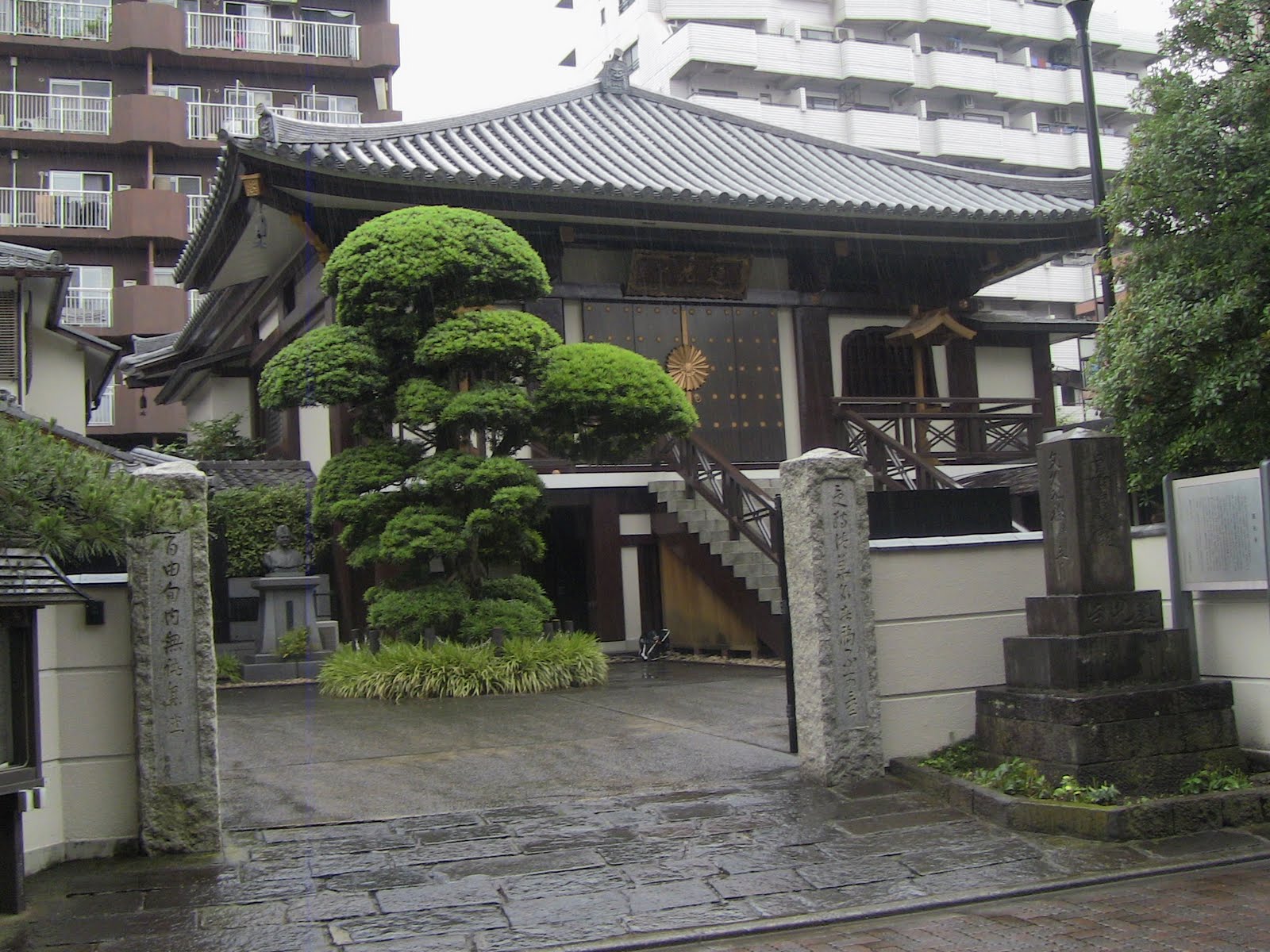
Renkoji - A temple for Netaji Subhash Chandra Bose in Japan

On June 18 we visited the Renkoji temple, where the ashes of Netaji Subhash Chandra Bose is believed to be kept. We have been thinking of making our visit to the temple ever since we heard of such a temple in Japan. It was a surprise to us to hear that Netaji is being respected in Japan, far away from his own country.


Netaji was a revolutionary freedom fighter who has a special place in the hearts of the youth in India. Though the history books in India have limitations in teaching about Netaji and his principles, people respect him as the most influential personality who could contribute the most to the Indian freedom fighting. He was the first to call Gandhiji as Mahatma. Mahatma in Hindi means the great soul. Due to the differences in approaches and opinions towards the methods adopted for India’s freedom movement with Indian National Congress, Netaji left India to seek possible help from other global partners like Germany and Japan. He succeeded to get the help from the then emperor of Japan during second world war and formed Indian National Army, INA by gathering Indians settled in Malaysia, Singapore and similar neighboring countries. Many Indians from the British India also joined in INA to fight against British East India Company rule.

My Experience with POVO After Leaving Japan - A Caution for Foreign Residents

When I was living in Japan (until May 2023), I used KDDI mobile services for many years without any issues. When I was transferred internall...